Showing posts with label birds. Show all posts

Tuesday, 3 November 2009

Can golf courses help save threatened birds?

Environmentally friendly and rich in biodiversity are not phrases you often hear associated with golf course.

However they could be ideal places to provide sanctuaries for threatened birds and other wildlife.

In the past golf courses have been criticised by green groups for excessive water, pesticide and fertiliser use but a new joint publication, Birds and Golf Courses: A Guide to Habitat Management, marks a change in attitude by the industry.

The good news is there are golf courses across the UK, where wildlife friendly measures have been a success. Every golf course has the potential to be a sanctuary for wildlife, and to provide an important stepping stone for birds and other animals whose habitat is under threat.

The emphasis now is on encouraging more clubs to do their bit to help protect birds and other wildlife. For example planting native plants like heather and creating reed beds and hay meadows as well as reducing pesticide and fertiliser use can all make a big difference to birds like skylarks, woodlarks, and corn buntings.

Across the UK there is 140,000 hectares of rough and out-of-bounds areas on golf courses which could be managed for wildlife. This is the same sized area covered by all the RSPB’s UK nature reserves!

It’s good to know that there has been a growing awareness over the past decade or so that courses need to do more for wildlife. While there are some green-keepers who still put more water and pesticides on their courses than the environment can stomach, there are many golf clubs that are managing habitats for wildlife on their land.


One golf course owner who is blazing a trail for wildlife is Paul Stevenson, from New Malton Golf Club in Hertfordshire. As well as cutting down on chemical and water use he has used the 40 hectares of out-of-bounds areas on his course to create habitats for birds and other animals.

So next time you are out for a round, take a look around you and see what wildlife is watching the play. And if there isn’t any – ask the club to make their greens more welcoming.

Friday, 16 October 2009

Sharing Nest Boxes

I saw this story today and thought it was just soooo cute!

From the
RSPB:

Renting out one of your rooms or moving in with friends are options that many people have taken during the recession but it seems some wildlife has had the same idea.

At the time of year when we're urging people to put up nestboxes ready for next spring, a surprising number of unusual shared occupancies have come to light.

Our wildlife enquiries team has been encouraging callers to clean out existing nestboxes and to put new ones in position so they are in place for when birds start to 'recce' possible nest sites in the spring.

Some birds will start to roost in them in the next few weeks as the weather turns colder too.
And the number of extraordinary reports of some species doubling up in nestboxes in recent years has come as quite a surprise.

Barn owl nestboxes seem to attract the most unusual tenants, with reports of the generous bird of prey sharing their nest boxes with birds like jackdaws, kestrels (see image) and stock doves.


Many birds are furiously territorial, especially when raising their young. And callers have reported that some birds sharing a home are constantly harassed when trying to get into their house-share, making it even more bizarre that they should persist.

Other birds that have been spotted nest sharing are blue tits and great tits and both of these species have been seen sharing with pied flycatchers too.

Experts believe one reason for the shared occupancies could include multiple cavities in some nest boxes, leading to the birds fledging from one cavity and returning to roost in the 'wrong hole' that is already occupied.

Another reason could be because they have unwittingly laid their eggs in the active nest of another species.

There may also be a lack of nesting sites in some areas. Many larger birds that nest in holes in trees or in older, undisturbed buildings are having difficulty finding suitable nesting sites, as buildings are knocked down or converted.

Richard James, one of our wildlife advisers says: 'Now is a great time to put up new nestboxes or give old ones a clean ready for the next round of breeding in spring. Long before eggs are actually laid and chicks hatched, the adult birds will start to scope out possible nest sites.

'It's great to hear that people are getting so excited about unusual lodgers and although its quite unusual, it just goes to show you never know quite what you might find in your nest box.
'You could be providing a home for all sorts of strange houseguests!'

If you discover that you have two species sharing a box, you should put up another box elsewhere in the garden for next year. Both species might want to breed in the area again the following year, so adding another box will ensure they have their own space.

Richard says: 'When two species both have young in it will get crowded, so the adults might have to wait their turn. They would both appreciate another box!

'Different species have different nesting requirements, but the general rule of thumb is to position a nestbox so it isn’t easy for predators to get in, and try and face it away from strong sunlight and prevailing winds.'

Visit the RSPB website to find out more.

Friday, 25 September 2009

Is your garden a wildlife heaven or hell?

Many gardens unintentionally contain items that can be hazardous to wildlife.

Every year thousands of birds and other creatures sustain injuries from hazards that could easily be prevented.

Typical problems reported to charities like the RSPB and RSPCA include birds crashing into windows, getting feet and beaks trapped and drowning in water butts, baby birds being abandoned because of hedge cutting and hedgehogs being injured when piles of leaves are swept away.

So what can you do to make your garden safer for wildlife?


Window strikes Thousands of birds fly into windows at this time of year with the sun lower in the sky and clumsy late youngsters around. Window strikes are often fatal. They can be prevented with window stickers that have a scarecrow effect. Garden mirrors can be equally hazardous so sticker them as well if you can.

Loose netting Loose fruit netting and mesh bags containing fat balls can easily trap bird’s feet and beaks and other wildlife like snakes could get caught in them too. Pull netting over fruit or ponds taught and remove fat balls from bags.

Hedge cutting Some late nesting birds stay in their nests long into September and hedge cutting and maintenance can disturb the adults so they abandon their chicks. Worse still, power tools can injure the birds or destroy the nest. Hedge cutting is best left until early October.

Leaf and log piles Many hedgehogs sustain horrific injuries when people clear log piles with rakes and power tools. Some have literally been sliced in half and others have lost legs and noses. So, always clear log piles, especially close to hibernation periods, with extra care and avoid using sharp tools.

Drowning Many birds drown in water butts and steep sided ponds at this time of year as they overstretch and fall in. Put a lid on butts if possible and if building a pond try to create gentle slopes so birds can drink easier and mammals like hedgehogs can get out. Putting in a secure sloping plank of wood can help animals get closer to the water and give them an easy, safe exit route.

Feeders Poor quality bird feeders are responsible for hundreds of birds getting trapped and being unable to escape, as well as squirrels. Feet get caught in cheap wire netting round the outside and some birds can even get their heads caught in the hole the food comes out. Make sure you check for any loose bits of wire and choose a feeder made from sturdy materials. Always opt for a feeder with a lid so birds don’t try and access food from the top and get stuck that way.

Slug pellets Some slug pellets can pose a threat to wildlife if used excessively. If birds or hedgehogs eat the slugs and snails that have been tempted by Metaldehyde pellets, this chemical can accumulate inside the unfortunate animal making them very poorly. It is best to use non-toxic control such as beer traps, barriers and hand picking.

These are just a few easy ways in which you can ensure your garden or allotment is a wildlife heaven, not a wildlife hell.

Tuesday, 15 September 2009

European Court Puts End to Spring Hunting In Malta


Malta has finally been forced to comply with European bird protection laws.

This follows a landmark ruling last week by the European Court of Justice, which has declared that Malta has been breaching European law by allowing the spring hunting of quail and turtle dove passing through the islands on migration.

When Malta joined the European Union in 2004, it agreed to abide by European law, including those protecting birds.

But, despite this, Malta allowed the islands’ hunters to continue shooting quail and turtle dove during their spring migration – a time when they are most vulnerable as they migrate from Africa.

The Maltese islands are located on a key migration route across the Mediterranean. A recent study analysing bird ringing recoveries in Malta, showed that birds originating from over 36 European countries, including the UK, have a connection with Malta.

In many parts of Europe, including the UK, the turtle dove and quail are declining rapidly. Allowing these species to pass over Malta in spring, in safety, removes a significant threat from these birds – birds that are already struggling for survival for other reasons, including intensive agriculture in Europe.

Following the ruling the Maltese government must now make the spring hunting of quail and turtle dove permanently illegal. However, hunting in autumn can continue for these and a number of other species.


It was only due to the hard work of BirdLife and its UK partner the RSPB that the case was brought to the European Court of Justice. It’s great, among so much bad news for wildlife and biodiversity, to have a good news story.
Images: Denis Cachia and BLM (rspb-images.com)

Wednesday, 12 August 2009

The Not So Glorious Twelfth


Today - the 'Glorious Twelfth' - marks the start of the red grouse shooting season.

The attendant media coverage that this once-a-year festival generates also spurs a lot of people to ask the RSPB what it thinks about shooting. At first, it might be tough to see what shooting and conservation have in common. After all, one is interested in killing birds, while the other wants to protect them - right?

But the truth is that the two interests have a lot more in common than you might think. Responsible shooters have a basic love of nature, as do conservationists. At a more practical level, both shooting and conservation rely on well-managed habitats to thrive, something which can benefit a wide range of wildlife.


It's not all plain sailing though. It's true that many areas managed mainly for shooting are also good for other wildlife. But there are some cases where shooting management overly favours the species being shot at the expense of all others. And this simply stores up environmental problems for the future.

The biggest problem, however, both for both shooters and conservationists, is the minority who choose to break the law and kill birds of prey in an attempt to boost the number of game-birds.

One hundred years ago, Victorian approaches to shooting made persecution like this the norm for birds of prey - dark days, which saw four raptor species driven to extinction in the UK: marsh harriers, goshawks, white-tailed eagles and ospreys. Happily, all four are now back in our skies, and wildfowlers along with most lowland shoots now live and work alongside birds
of prey.

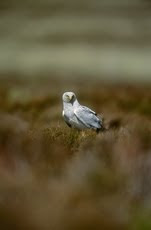
But the story isn't so rosy everywhere. Scottish Natural Heritage, the Scottish Government's wildlife authority, has stated that persecution associated with grouse moors is the main factor affecting the conservation status of the golden eagle. In England, hen harrier numbers are restricted to only a handful of pairs every year, when there is room in our uplands for hundreds.


The illegal killing and disturbance of birds of prey remains an unacceptable throwback to an out-dated way of managing the countryside. The fact that there are more peregrines nesting in our city centres than there are in the Peak District speaks volumes. Unfortunately, as birds of prey are by their very nature rare, it only takes a few illegal acts to wreak disproportionate damage - just as it only takes a few lawless individuals to bring the whole shooting community into disrepute. This simply serves to drive a wedge between the shooting and conservation communities.

It's therefore in everyone's interest - shooters, conservationists and the general public - that these selfish few are found out and brought to book.

The RSPB's bird of prey campaign aims to do just that, demanding an end to the illegal killing of birds of prey. It's very encouraging that several shooting organisations, including the British Association for Shooting and Conservation and the National Gamekeepers Organisation, have signed the pledge, as well as over 140,000 concerned individuals.

Please, help us root out the few bad apples and save birds of prey, by adding your voice (click here).

GUEST BLOGGER: Sue Armstrong-Brown, Head of Countryside and Species Conservation at the RSPB.

Images: Andy Hay (rspb-images.com)